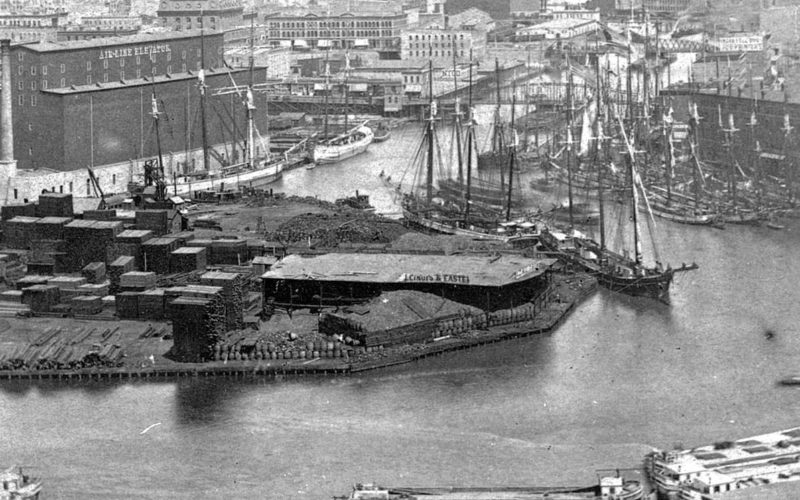
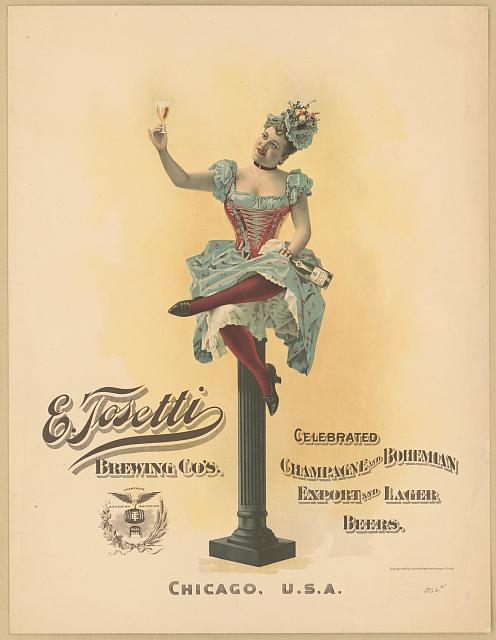
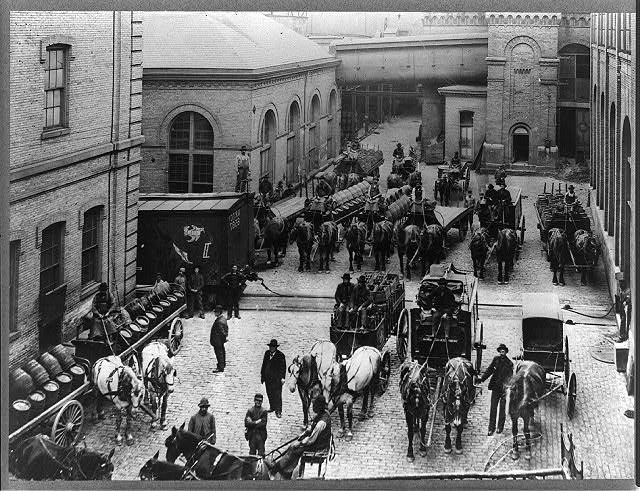
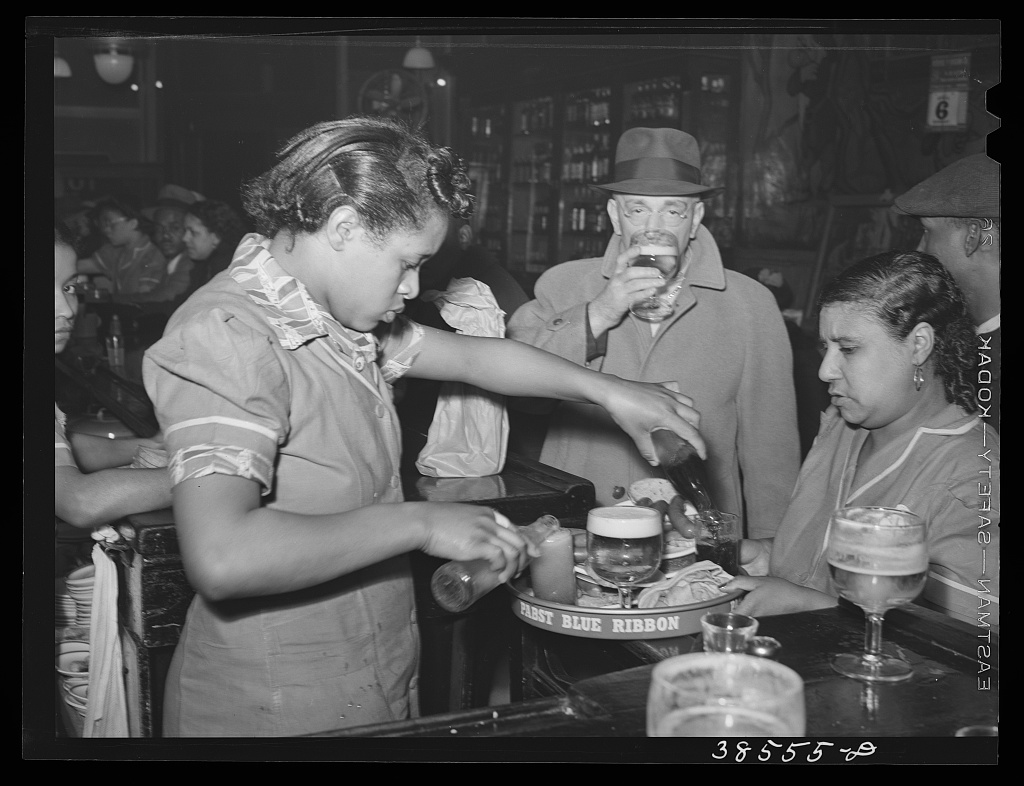
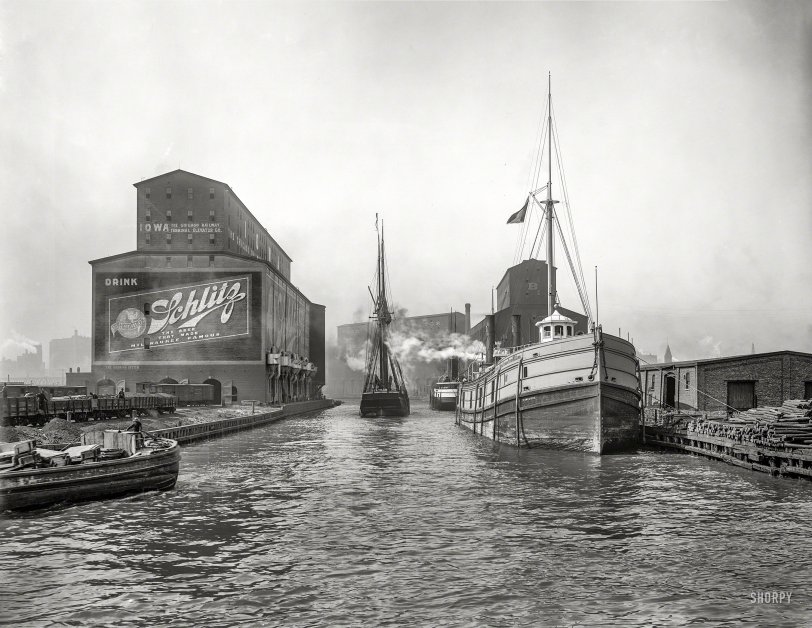
Chicago has a long history of brewing and distilling; of taverns, pubs, and saloons; of alcohol distribution and consumption so we hope you will soak up this episode on the history of alcohol and its impact on the city. This episode of the Windy City Historians podcast is a historic concoction ranging across Chicago’s history to explore the interplay of sociability and society around beer, spirits, and brewing to create, support, and shape the development of this toddling town and vice versa.
We hope this will whet your appetite and briefly quench your thirst for history through a unique take on the City of Big Shoulders. In this episode co-hosts Christopher Lynch and Patrick McBriarty talk with Chicago historian Liz Garibay to discuss her research and fascinating stories of American and Chicago history as viewed through the lens of alcohol. Learn the true origin of PBR’s Blue Ribbon — it’s NOT from the World’s Colombian Exposition of 1893 — OR about the Lager Beer Riots of 1855 — as we serve up another interesting brew of Windy City history.
Cheers!
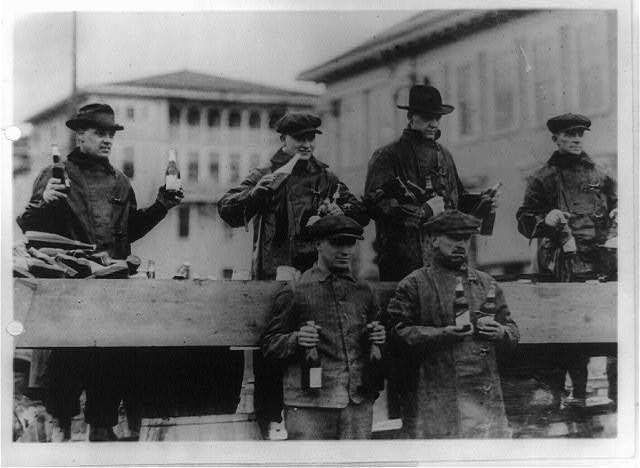
Beer for Chicago intercepted in Zion, IL during Prohibition
In this episode of our “Laying the Foundation” series of the Windy City Historians we explore an often ignored and long forgotten era and complete our interview with Dr. Ann Durkin Keating. We tap into the history of Juliette Kinzie and the city’s early wheelers and dealers as it rises up out of the swampy prairie landscape along the Y-shaped Chicago River on far southwestern shore of Lake Michigan.
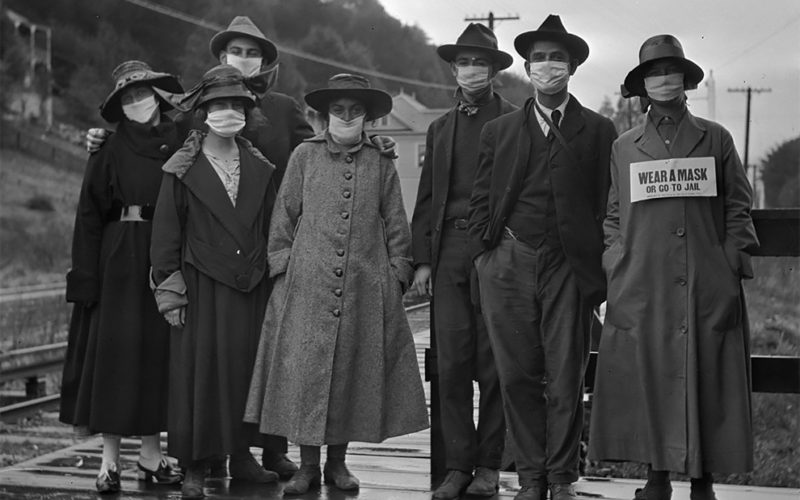
The contagion began suddenly in the northern suburbs of Chicago and floated south toward the city like an invisible cloud. Soon restaurants, saloons, and theaters were closed and the police had the power to break up crowds and arrest individuals for spitting, coughing or sneezing in public. Public funerals were forbidden and elective surgeries canceled. Everyone wore face masks. Was this Spring, 2020? No, it was Chicago in the Autumn of 1918.
Join the Windy City Historians for this special episode as we step away from the chronological telling of Chicago history of our ongoing “Laying the Foundation” series, and instead chart the course of epidemics and outbreaks in Chicago history. In particular, we dig into the, so called, Spanish Influenza epidemic of 1918. This pandemic reveals many parallels between the events of 1918 and today’s struggle with the novel coronavirus (SARS Cov-2, its new official name) in 2020.
In this episode we interview historian Joseph Gustaitis, author of Chicago’s Greatest Year, 1893 and Chicago Transformed: World War I and the Windy City to learn about Chicago’s the first health crisis in 1835 and subsequent outbreaks and diseases plaguing the young city leading up to the Spanish Influenza outbreak of 1918.
A cataclysmic event in 1918 and 1919 this epidemic infected one-third of the world’s population, over 500 million people and killing approximately 1% of the human population on earth, an estimated 20-to-50-million people. In the United States alone approximately 675,000 citizens died — more Americans than were killed in WWI and WWII combined. The pandemic affected the way Americans and Chicagoan’s live and work today and was particularly lethal to people in the prime of their life. Learn more about this incredible story 100+ years ago and the parallels and differences with today’s pandemic.
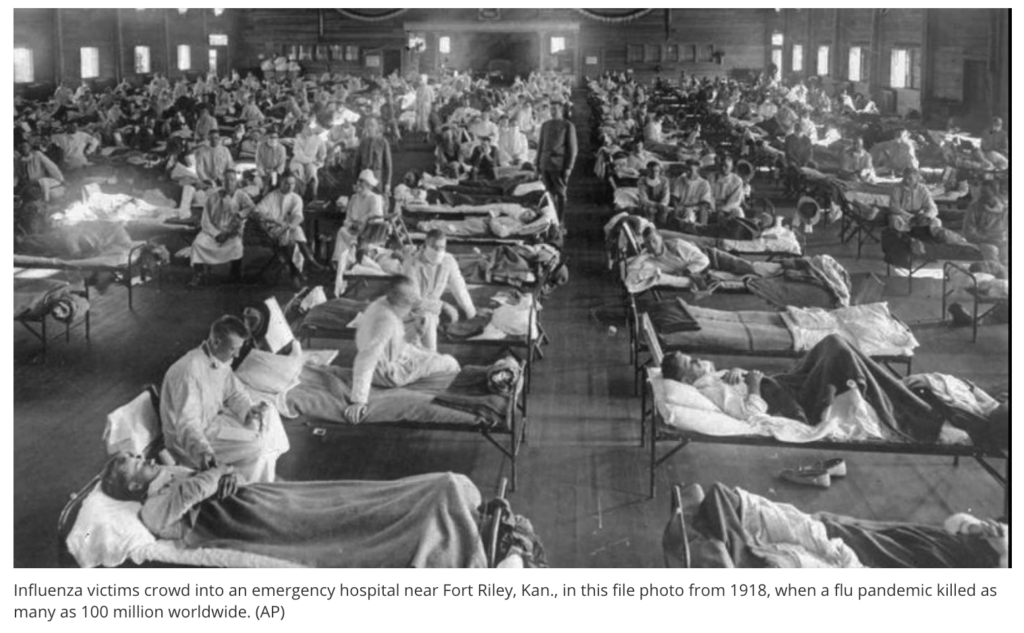
Sick bay at Ft. Riley, Kansas in 1918
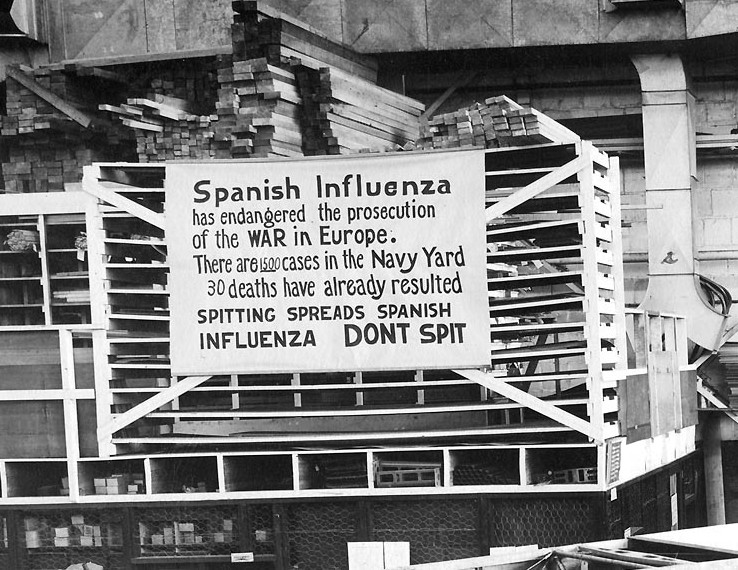
Posting in Chicago in 1918
St. Louis Red Cross Motor Corps on duty Oct. 1918 Influenza epidemic
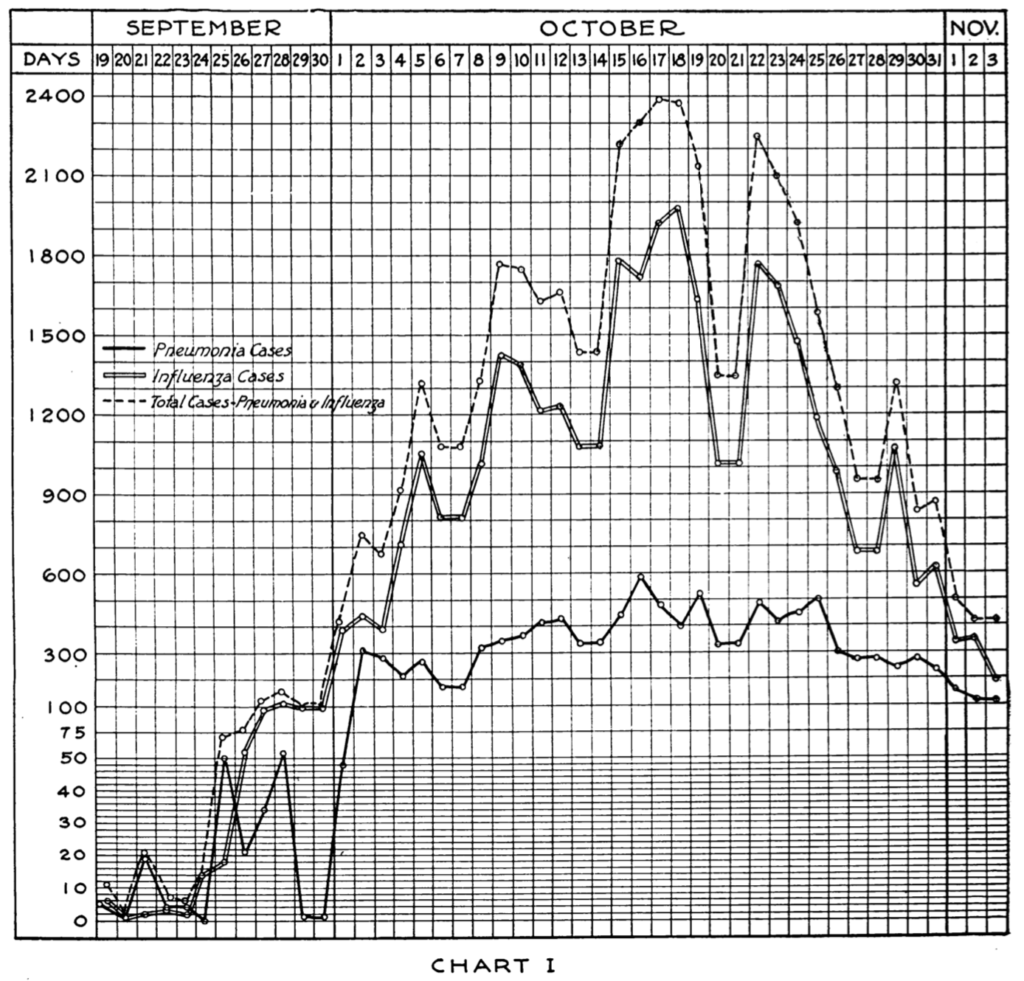
Reported daily flu cases in Chicago from Dr. Robertson’s Preliminary Report in Nov. 1918
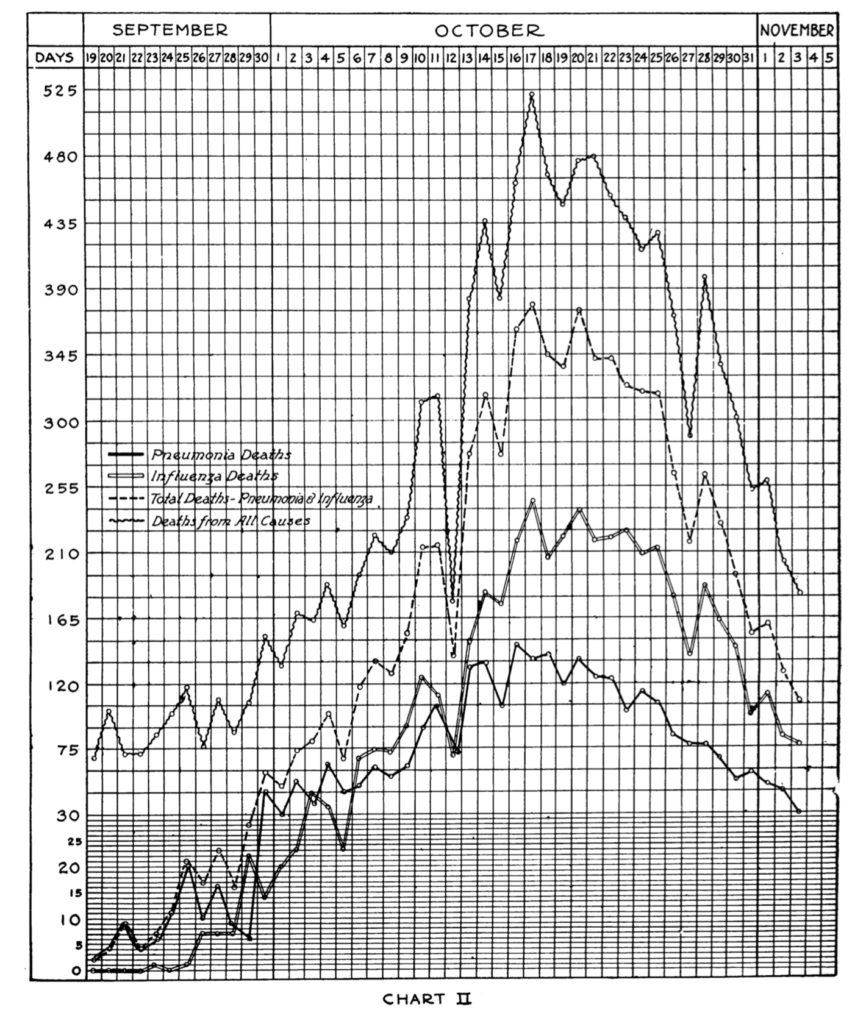
Reported daily deaths from flu in Chicago from Dr. Robertson’s Preliminary Report in Nov. 1918
Links to Research and History Documents
We mention in this episode one known documented account of whites giving smallpox infected blankets to Native Americans. This is attributed to the letters of Jeffery Amherst a British officer stationed at Fort Pitt in later day Pittsburgh, Pennsylvania, who under siege in 1763 during the French and Indian War (1754 – 1763) writes to Colonel Henry Bouquet. Much has been written of this legend this so a variety of sources are cited on the topic below:
Influenza Encyclopedia: the American Influenza Epidemic of 1918-1919: A Digital Encyclopedia produced by the University of Michigan Center for the History of Medicine and Michigan Publishing, University of Michigan Library.
Blog post from a professor of biology at the University of Massachusetts Dartmouth on how infectious diseases spread, “The Risks – Know Them – Avoid Them,” by Erin Bromage
Please note Ward Churchill mentioned above sadly perpetuated the myth of the U.S. Army spreading smallpox to First Nations in at least six publications between 1994 and 2003. Churchill entirely fabricated incidents which never occurred, about individuals who never existed. His sources were completely falsified, and talk about fake news, he repeatedly concealed evidence in his possession discrediting his falsified version of events.
Below are additional links and research we touch upon in this episode:
Piping fresh water from Waukesha, Wisconsin to the World’s Fair from a Jan. 6, 2012 blog post “Armed Standoff Over Wisconsin Water” by B & M Technical Services Inc.
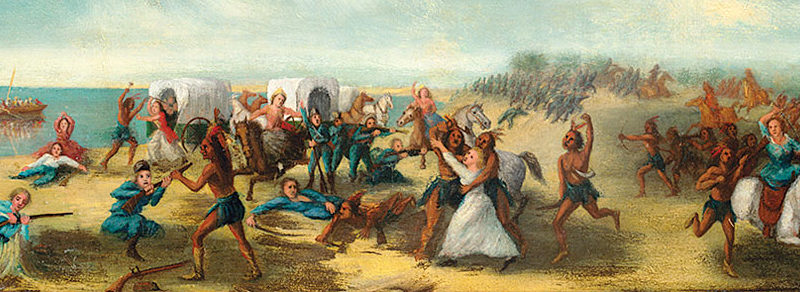
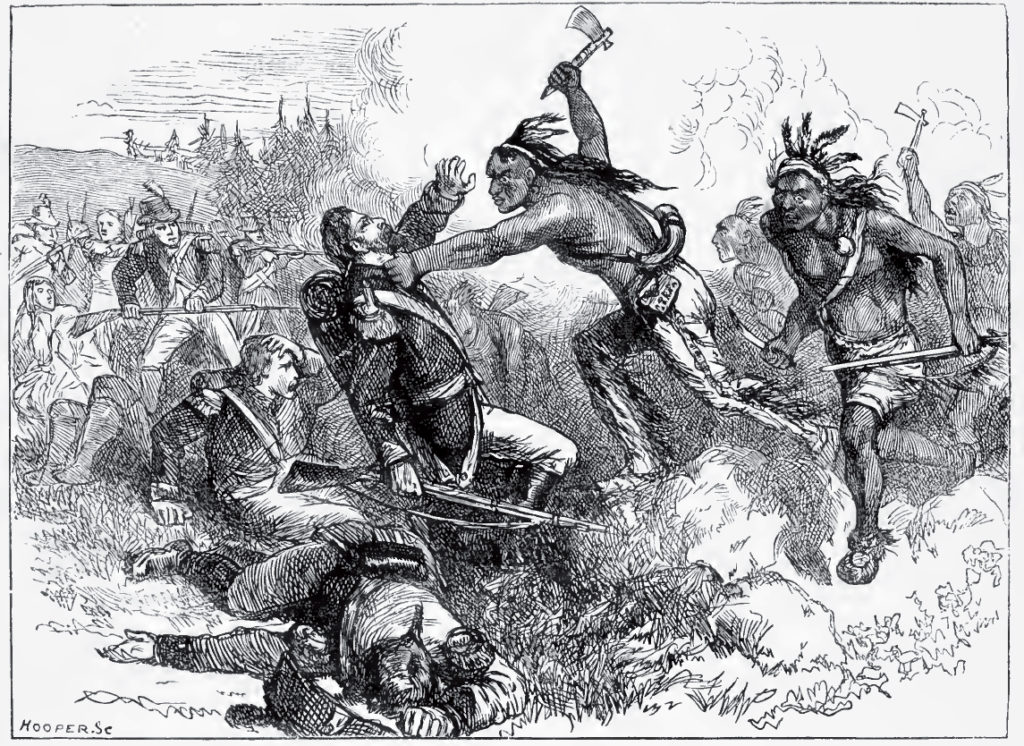
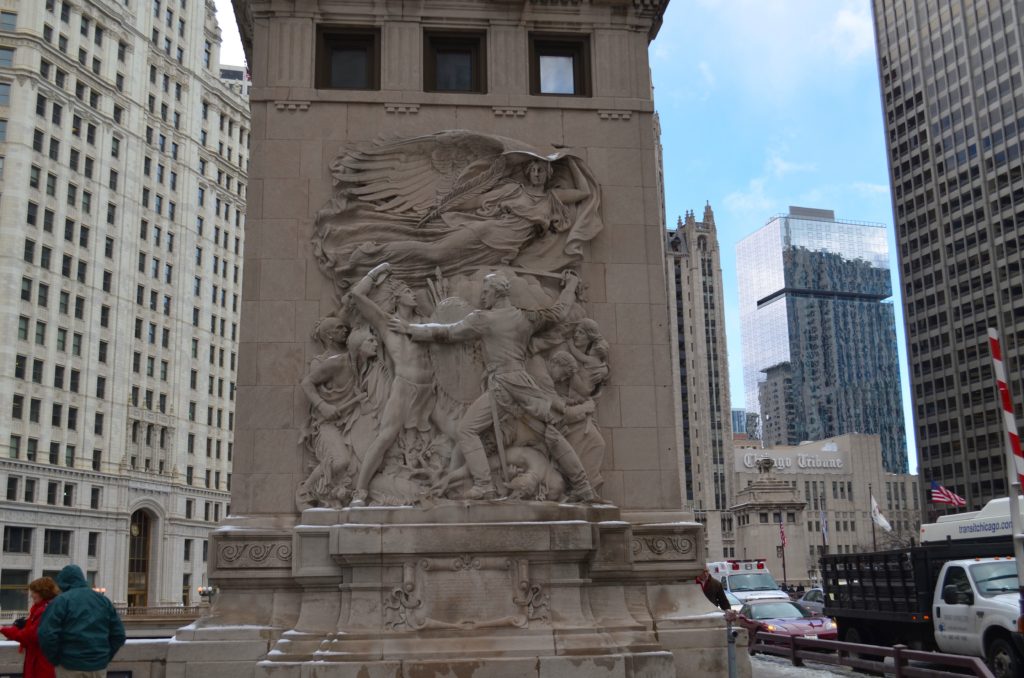
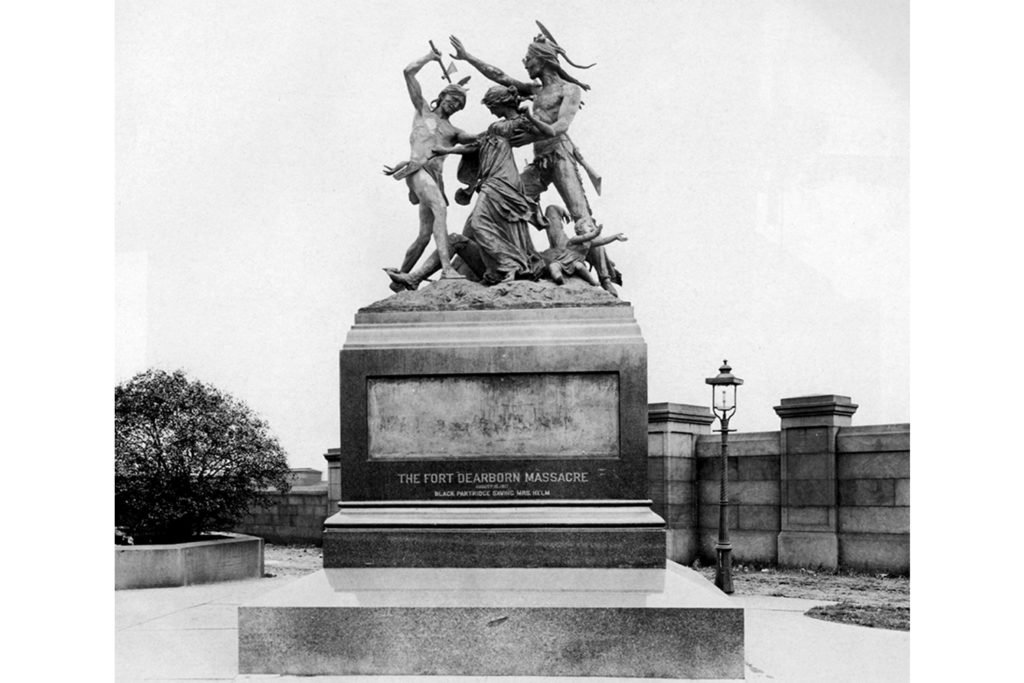
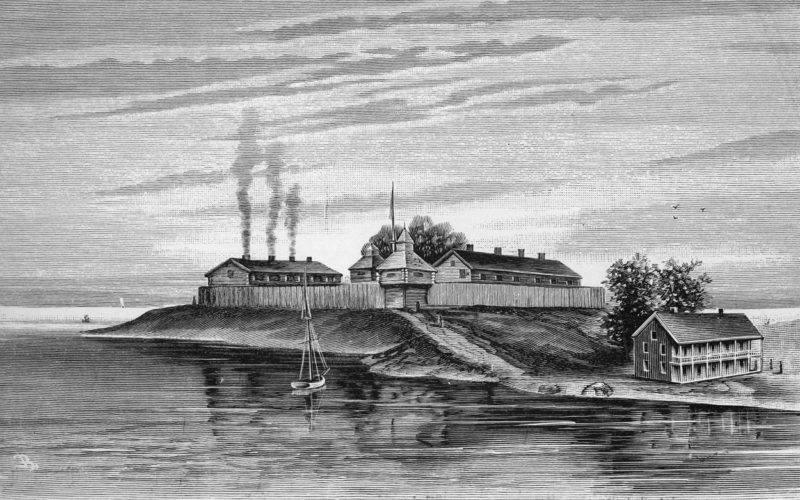
Fort Dearborn at the beginning of the War of 1812 . . . is it a Battle or a Massacre? How should we, in the twenty-first century, talk about the events that occurred on Chicago’s lakefront on August 15, 1812 — a month-and-a-half after the declaration of war? How do we describe what happened to the column of approximately 100 soldiers, farmers, women and children in Indian Country that abandoned Fort Dearborn, mostly on foot, for Fort Wayne when they are attacked by approximately 500 Native Americans?
Join us in this episode of the Windy City Historians Podcast for the second half of our interview with history professor Ann Durkin Keating, Ph.D. and The First Star — a reference to the first star on the Flag of Chicago. Does William Wells actually get his heart carved out to be eaten by the victors? Find out about this and much more as we discuss the final events, implications, art and language surrounding Chicago and aftermath of this infamous attack in Chicago in 1812. We hope you will enjoy it as much as we have putting it together!
Engraving of the Battle of Fort Dearborn by S.C. Hooper
Sculptural relief of the battle on the SW bridge house of the Michigan Avenue Bridge
Statue of the Fort Deaborn Attack
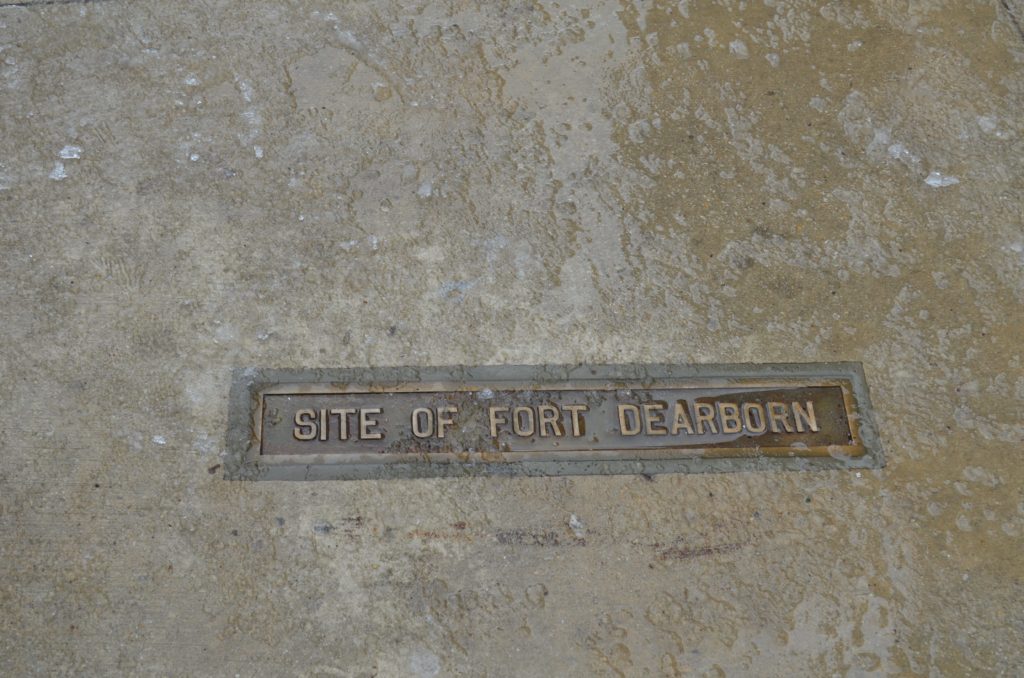
Commemorative plaque in the sidewalk by Michigan Avenue and Wacker Drive
Dr. Ann Durkin Keating being interviewed by the Windy City Historians
Dr. Keating also recommends: Constance R. Buckley, “Searching for Fort Dearborn: Perception, Commemoration, and Celebration of an Urban Creation Memory,” (Ph.D. diss., Loyola University, 2005), 6.
Topinabee (1758-1826) – a Pottawatomie leader from the St. Joseph River area
Simon Pokagon (1830-1899) – author and Native American advocate and Pottawatomie born in southwest Michigan. Son of Leopold Pokagon who was present at the Battle of Fort Dearborn.
Founded in 1803, Chicago’s Fort Dearborn is the western most outpost on the frontier, and by 1812 still the most isolated fort in Indian Country. The garrison and few settlers are outnumbered five-to-one by the neighboring tribes within a day’s ride. A pivotal year in Chicago history the corner of today’s Wacker Drive and Michigan Avenue is the site of Chicago’s first murder on June 17. At that point tensions are already high and this killing comes one day before Congress declares war on Great Britain. Although, the approximately 100 residents of Chicago will have no idea war is declared until mid- to late-July.
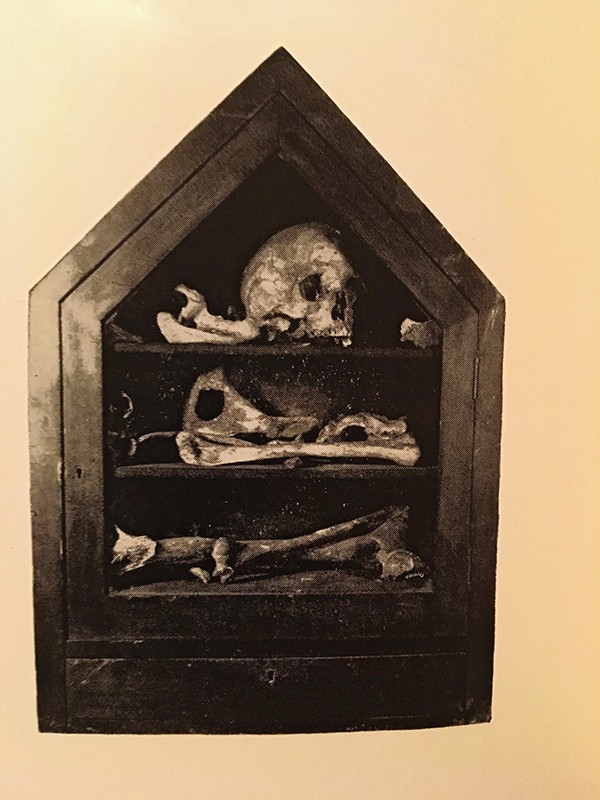
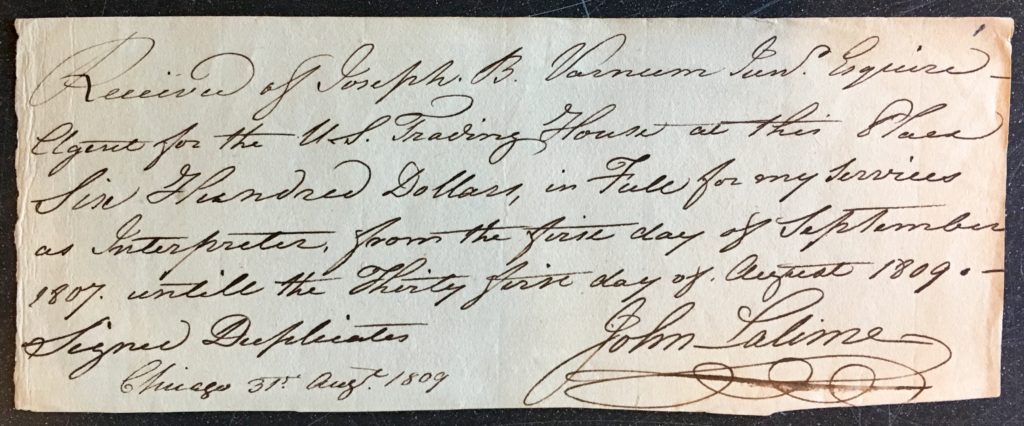
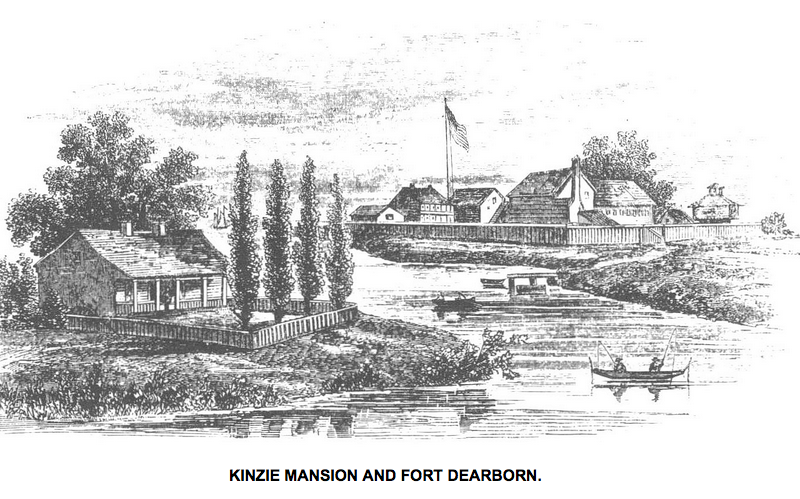
Just why trader John Kinzie stabbed fort interpreter Jean Lalime to death is a two-centuries’ old Chicago mystery. Was it jealousy, a trade dispute, bad blood? Listen in as we set the scene of Chicago on the cusp of the War of 1812, weight the accounts, motivations, and events surrounding this gruesome murder on the banks of the Chicago River. We hope you enjoy this fascinating slice of Chicago history and interview with writer Paul Dailing who authored the Chicago Reader article “The long death of Jean Lalime“.
The bones of Jean Lalime as once displayed at the Chicago Historical Society
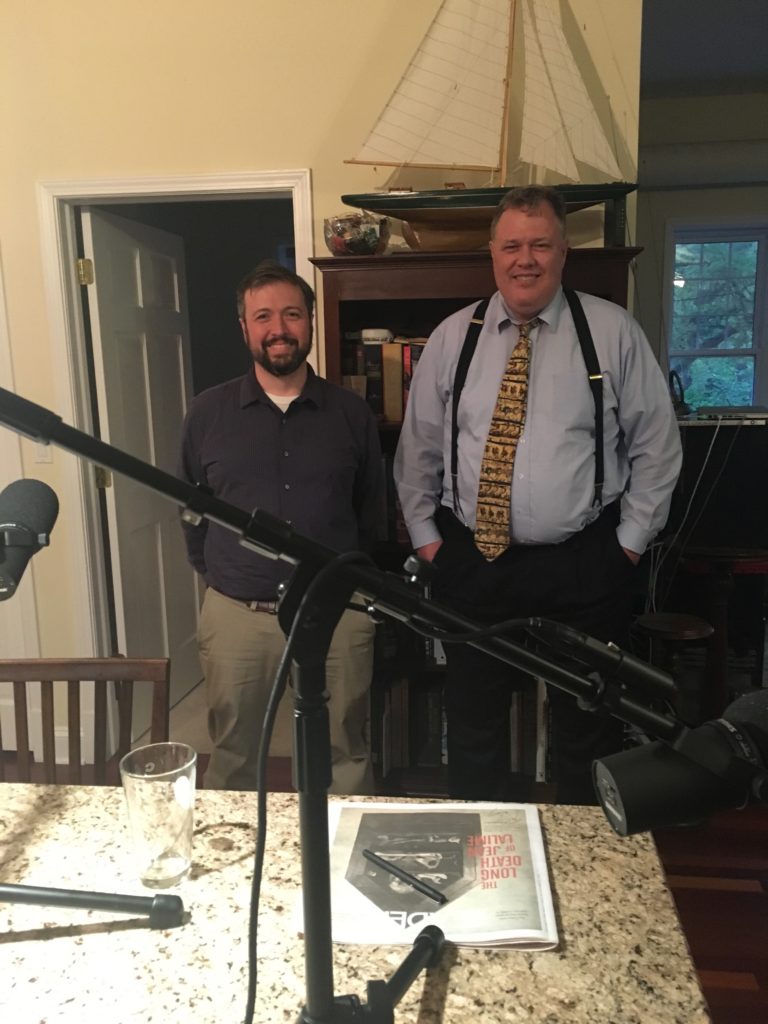
Freelance writer Paul Dailing & podcast co-host Christopher Lynch
Receipt signed by John (Jean) Lalime for his annual salary as Interpreter at Chicago
The Merriam-Webster Dictionary defines settler as, “a person who goes to live in a new place where usually there are few or no people”. Native Americans have lived in the greater Chicago area for approximately 10,000 years dating back to the last ice age. Dependent on long lost oral histories we have no clear records of the future city’s earliest peoples, though archeological efforts and early French documents seem to indicate no native villages existed within today’s Chicago city limits. There have been significant native villages in the suburbs surrounding Chicago, but no evidence of native settlement on the Chicago River has ever come to light.
The last seven episodes of the Windy City Historians Podcast has attempted to relate the first hundred plus years of Chicago’s earliest recorded history from the first westerners to pass through the area; be it Nicolet somewhere between 1628 and 1634 or Jolliet and Marquette in 1673. We now unveil this story of Chicago’s very first settler connecting us to the permanent and continuous settlement of the City of Chicago.
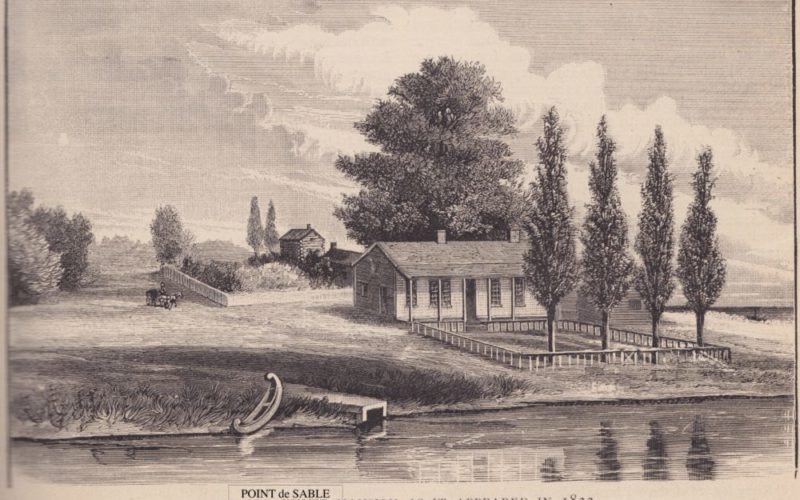
This man, a man of color, and his family has long been swept under the rug while the trader and opportunist John Kinzie was held up as the town’s founder, a man we can best describe as Chicago’s first scoundrel. We hope you will enjoy this in depth conversation with historians John Swenson and professor Courtney Pierre Joseph Ph.D. relating the life, times, and impact the very first settler made on the site and city that would follow in his footsteps. This is the story of the trader, gentleman farmer, and Chicago’s founder — Jean Baptiste Point de Sable. Mr. Point de Sable, and yes, that is the proper French spelling of his full surname, is a fascinating character we hope you will enjoy learning about as much as we have.
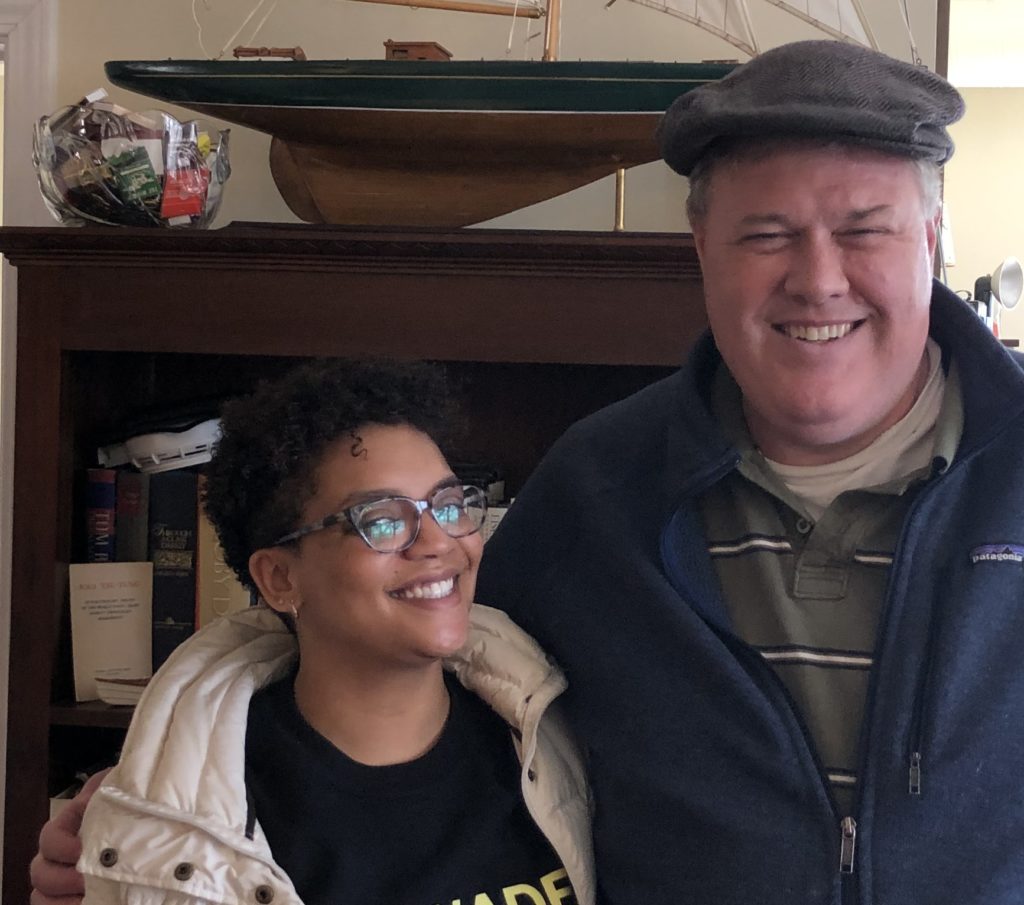
Patrick McBriarty & Dr. Courtney Joseph
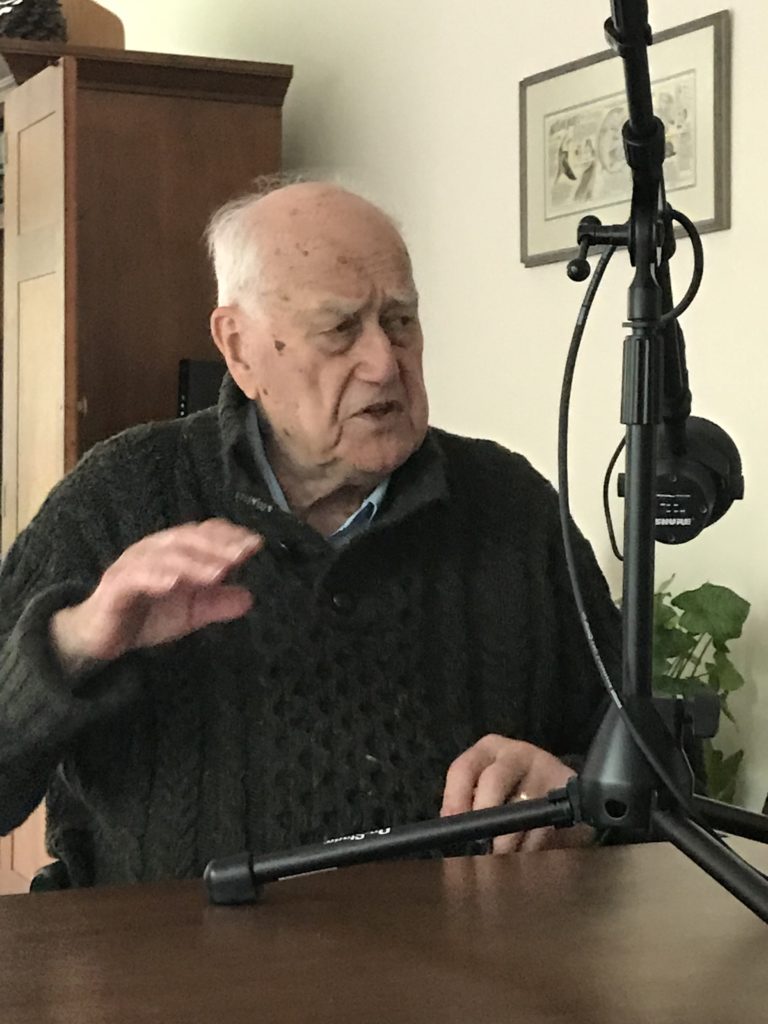
Historian John Swenson
Dr. Courtney Joseph & Chris Lynch
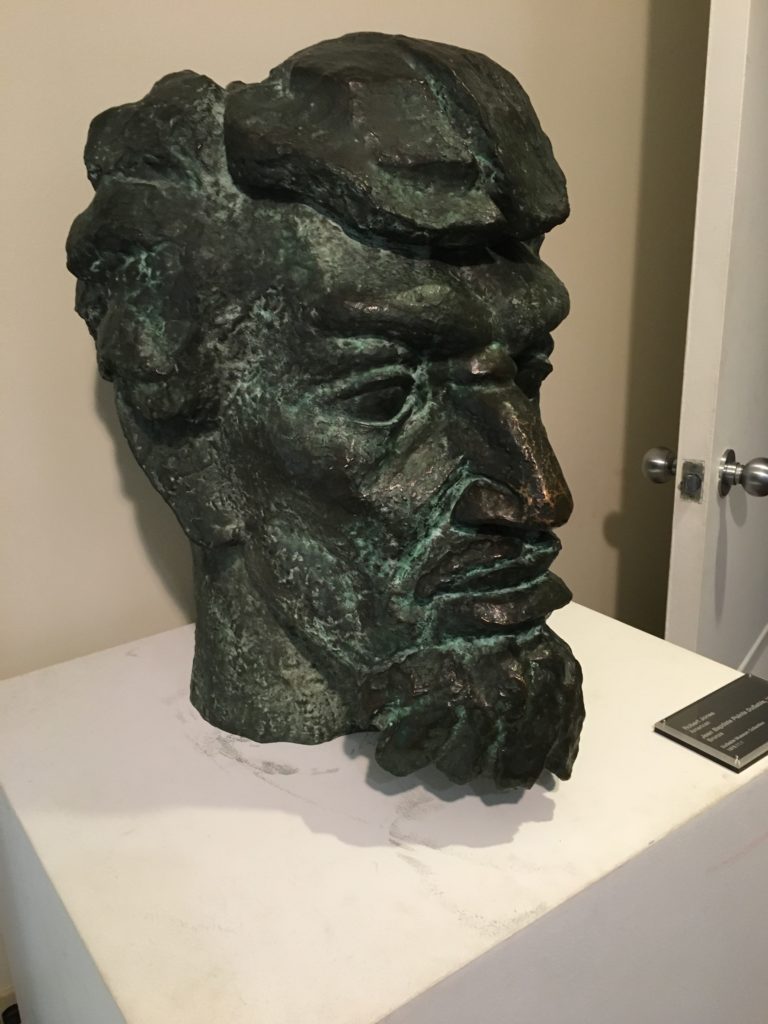
Bust of Point de Sable at the DuSable Museum
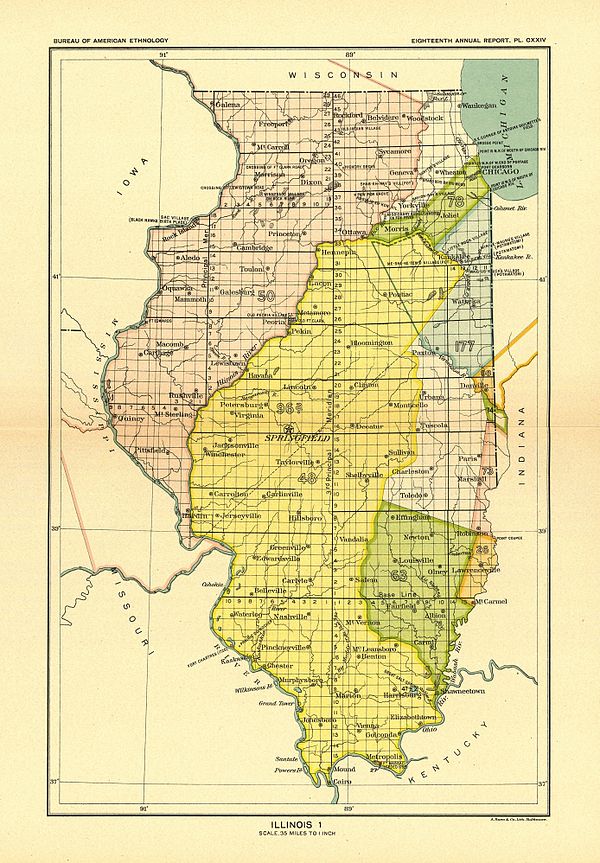
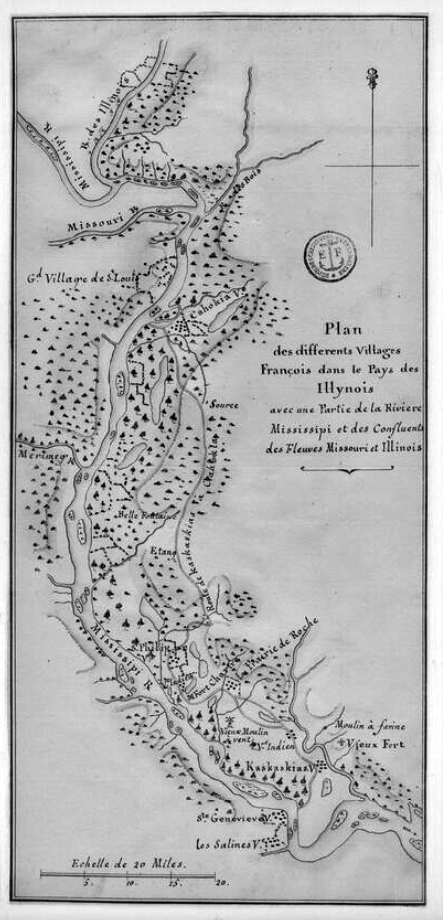
French Villages in Illinois from the 1778 Hutchins’ Map “Plan des differents Villages Francois dans le Pays des Illynois”
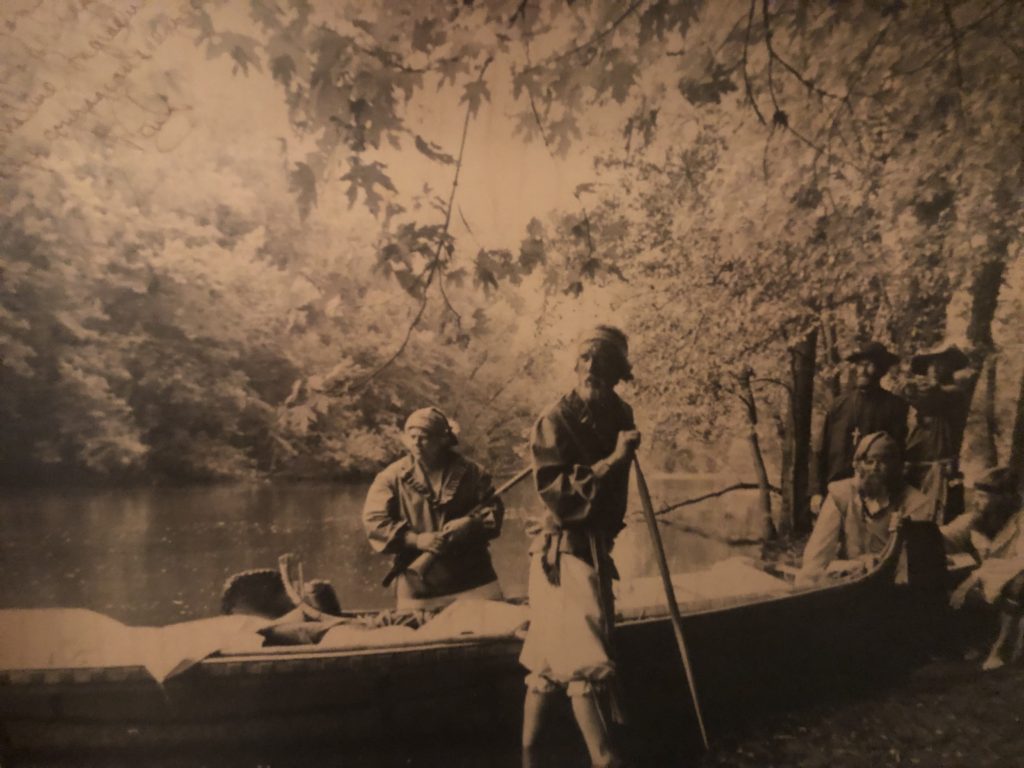
Perhaps nothing in Chicago history is as fundamental as Louis Jolliet and Jacques Marquette’s expedition of 1673. Their voyage by canoe from St. Anglace down Lake Michigan to the Fox and Wisconsin Rivers and the mighty Mississippi was of epic scale. On the way back north they paddled up the Illinois River passing through the place the Indians called “Chicagoua.” If the City of Chicago had a Mount Rushmore, Jolliet and Marquette would be on it. For Father Marquette the trip was to evangelize the Native Americans, while Jolliet’s focus was exploration, potential trade, as was the first to suggest a short canal to connect the waterway between Lake Michigan and the Illinois River.
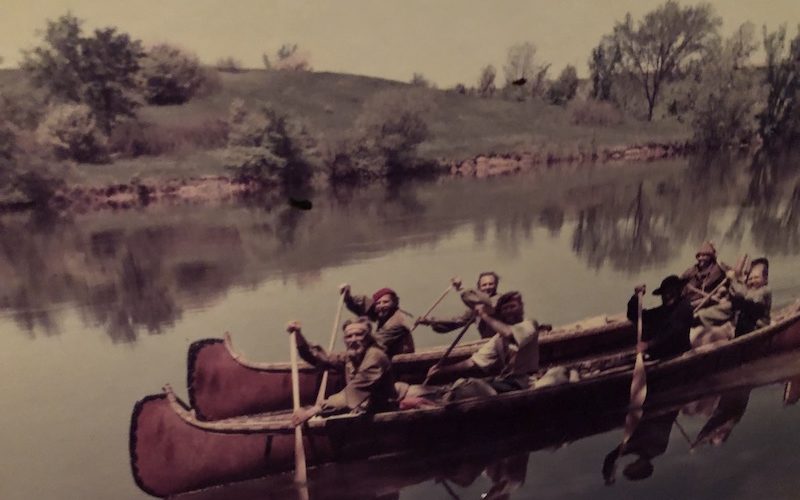
With the tricentennial of this historic feat approaching it appeared nothing was planned to commemorate it. For Ralph Frese, Chicago’s “Mr. Canoe” this was unconscionable. So he set out the idea of reenacting the Jolliet & Marquette Expedition, picked the crew to paddle it, and built the canoes, while remaining entirely behind the scenes to receive little or no credit.
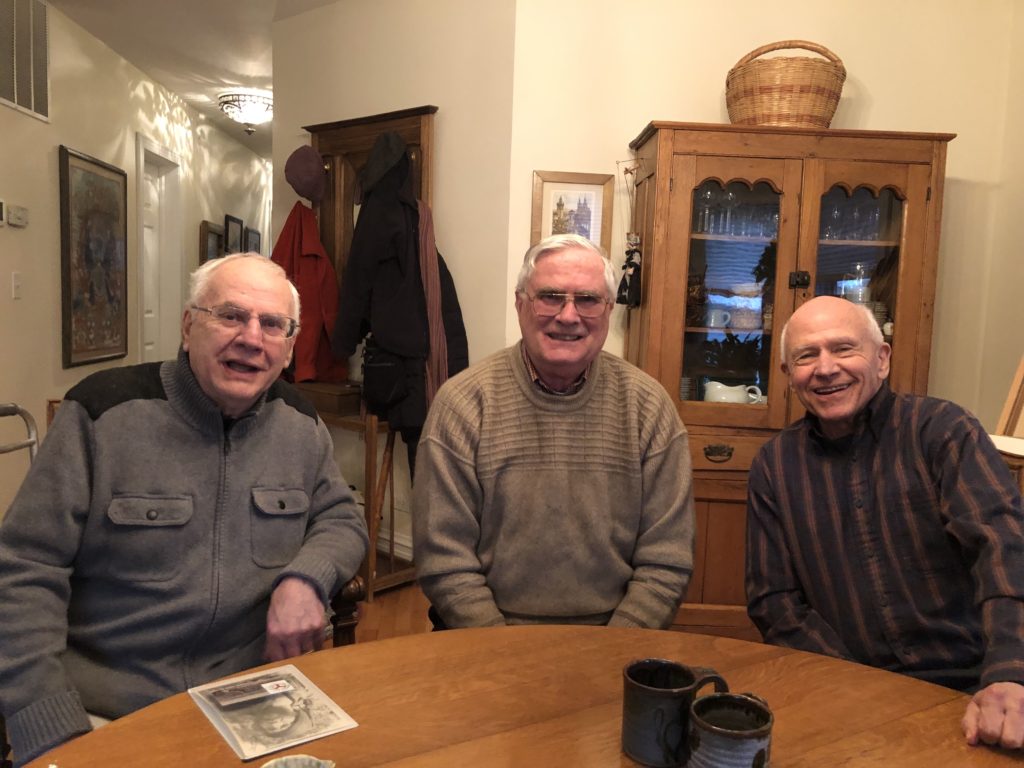
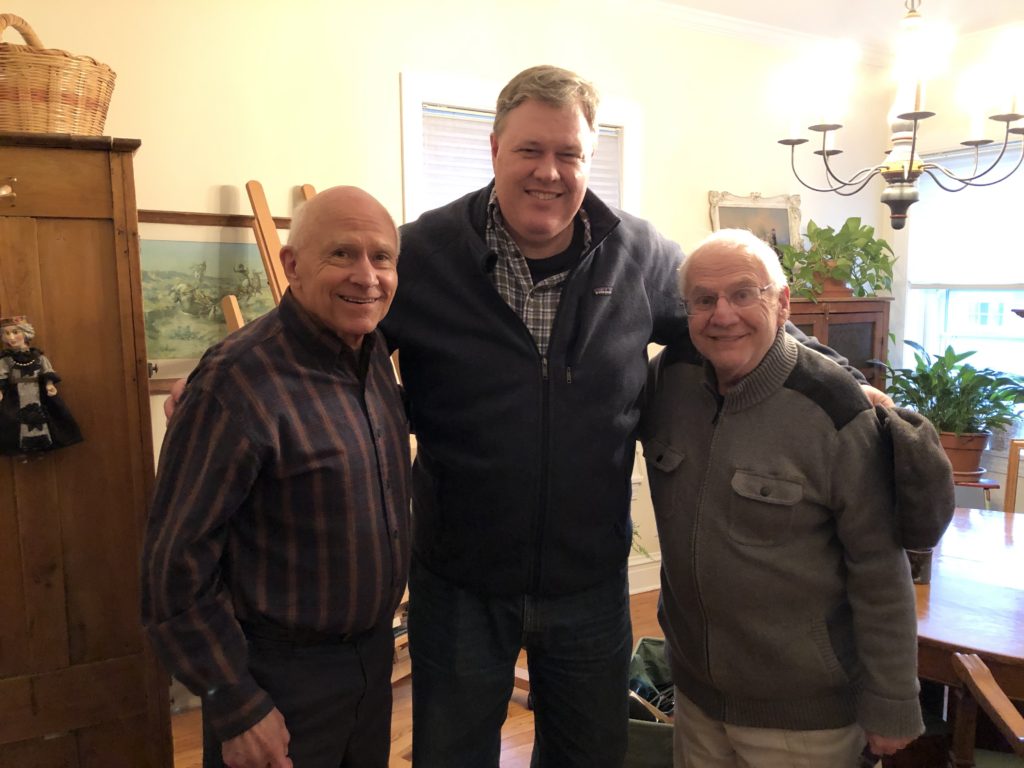
For this podcast, Chris and Patrick were thrilled to sit down with three key crew members of this 1973 re-enactment, Chuck McEnery and brothers Ken & Reid Lewis. Listen as this lively discussion unfolds commemorating the early origins of Chicago history. Filled with laughter and travails they persevered to set the stage for later historical reenactments, like the La Salle II expedition of 1976-77 recounted in Episodes 4 & 5. The re-telling 46-years later still feels fresh as the splash of paddles and songs of the Voyageurs wash across the waters of time.
Ken Lewis, Chuck McEnery, & Reid Lewis
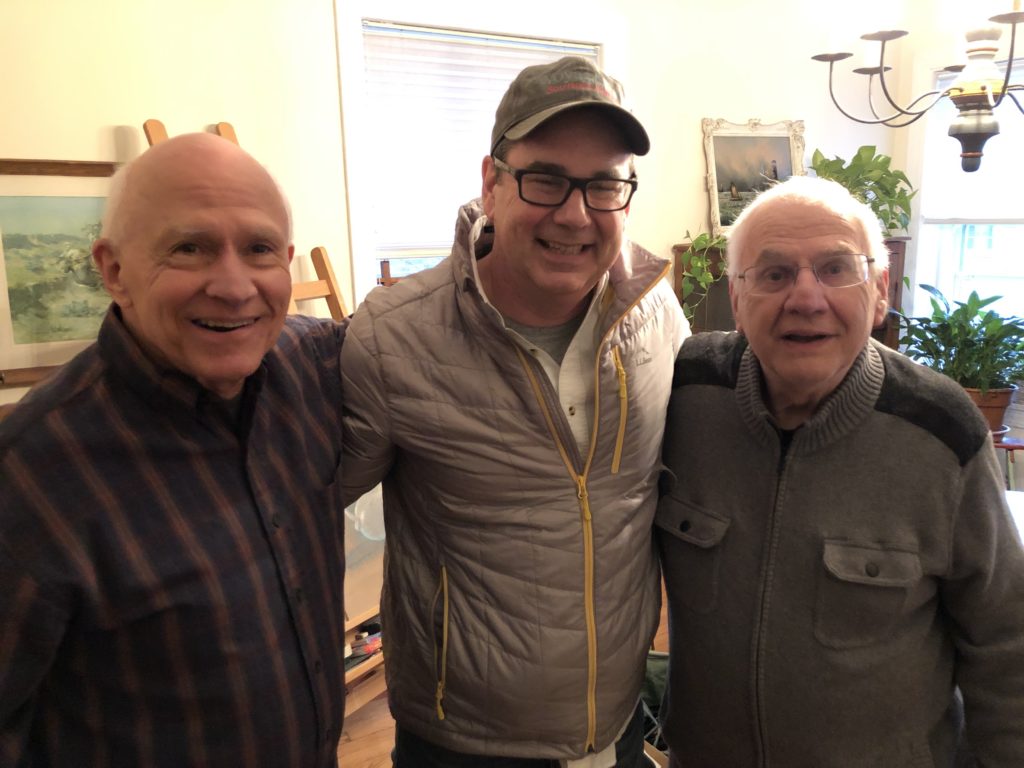
Reid Lewis, Chris Lynch, & Ken Lewis
Jolliet & Marquette 1973 re-enactment
Reid Lewis, Pat McBriarty, & Ken Lewis
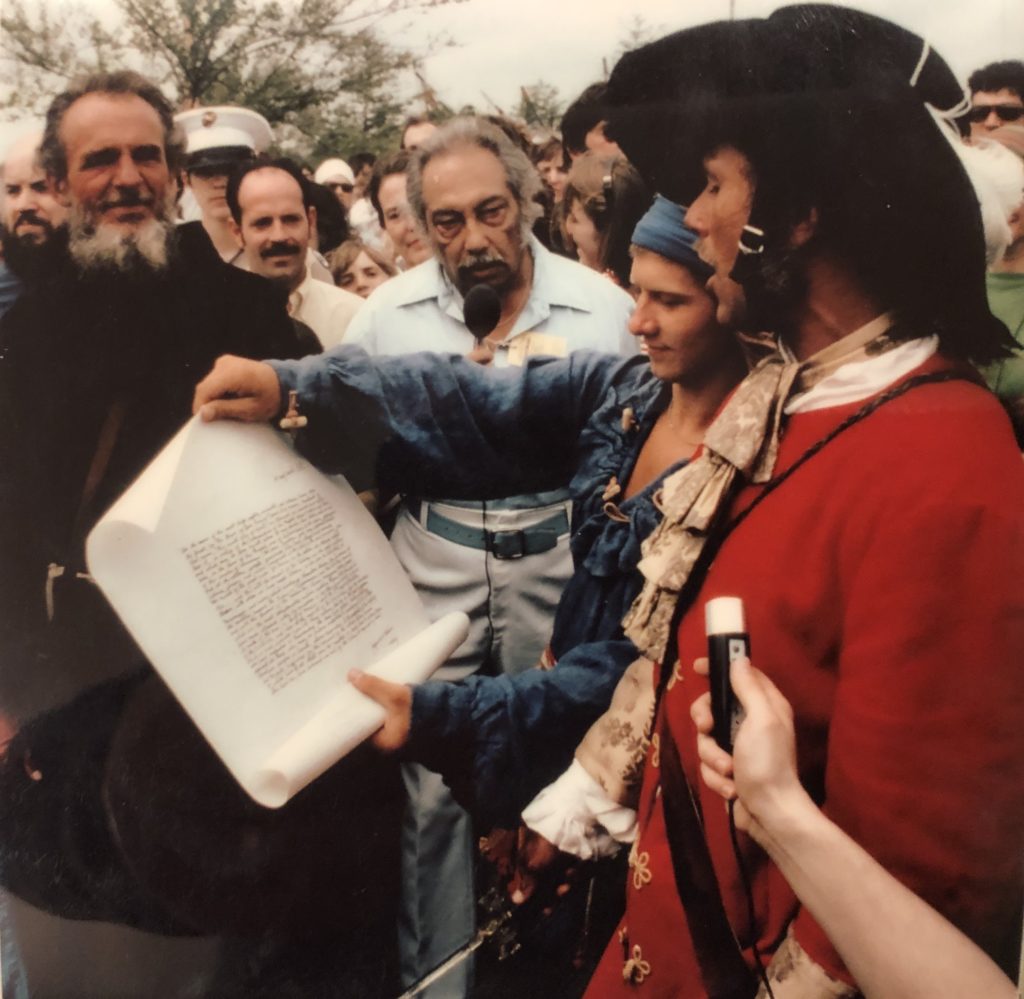
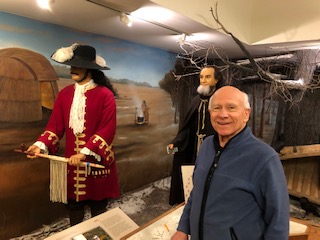
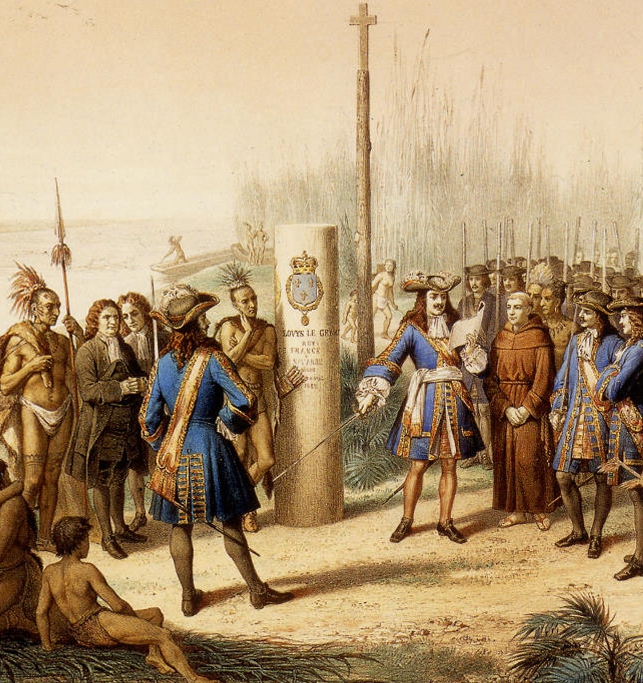
Reid Lewis (red coat) as La Salle and two other crew members claiming Lousiana for France
“Unquestionably the discovery of the Mississippi is a datable fact which considerably mellows and modifies the shiny newness of our country, and gives her a most respectable outside-aspect of rustiness and antiquity.” — Mark Twain, Life on the Mississippi
For the new country of the United States, the river that bisected it was old. This mighty river shaped the destiny of the towns and cities along its many miles of shoreline. Chicago was just a backwater to St. Louis, Missouri and Galena, Illinois before the railroads began to dominate transportation and Chicago’s rapid rise to prominence.
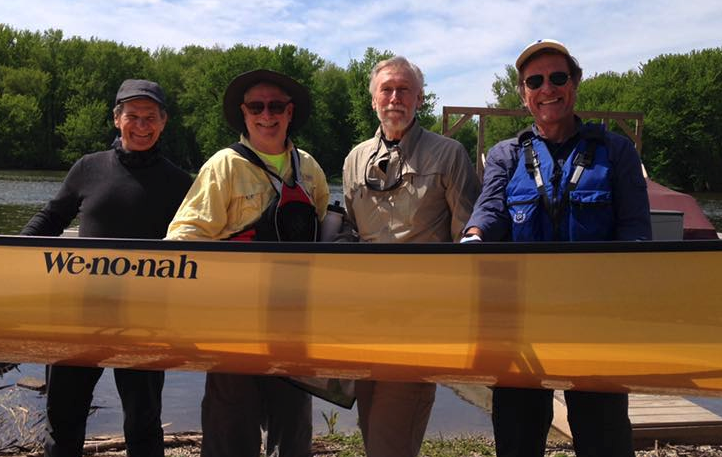
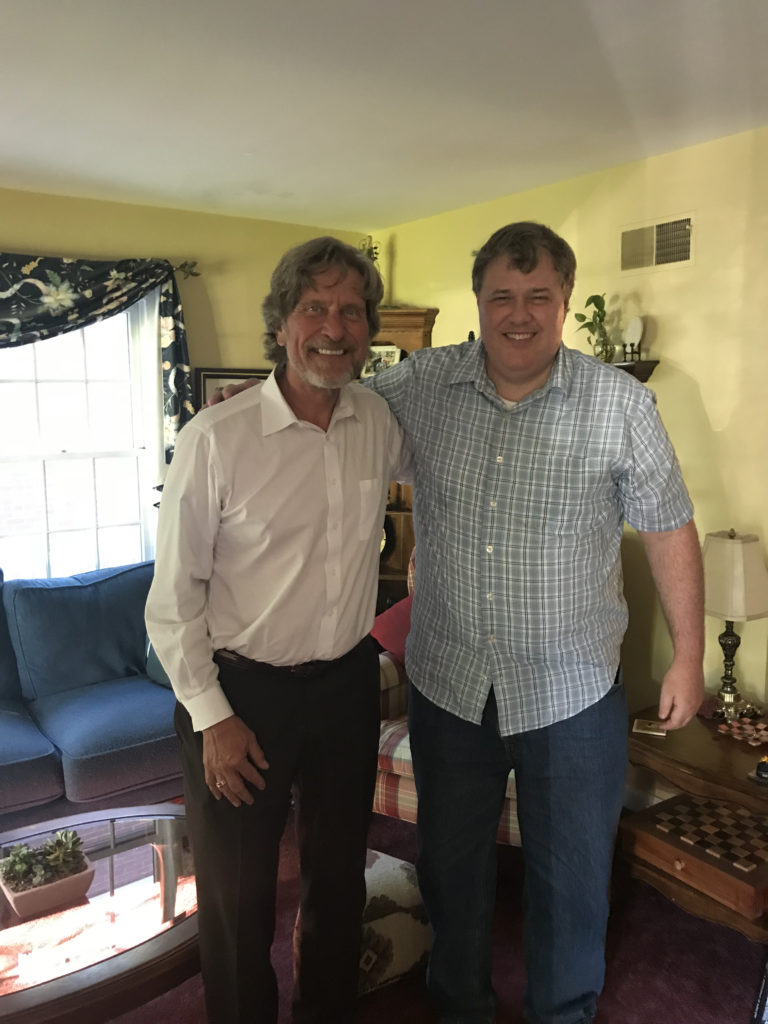
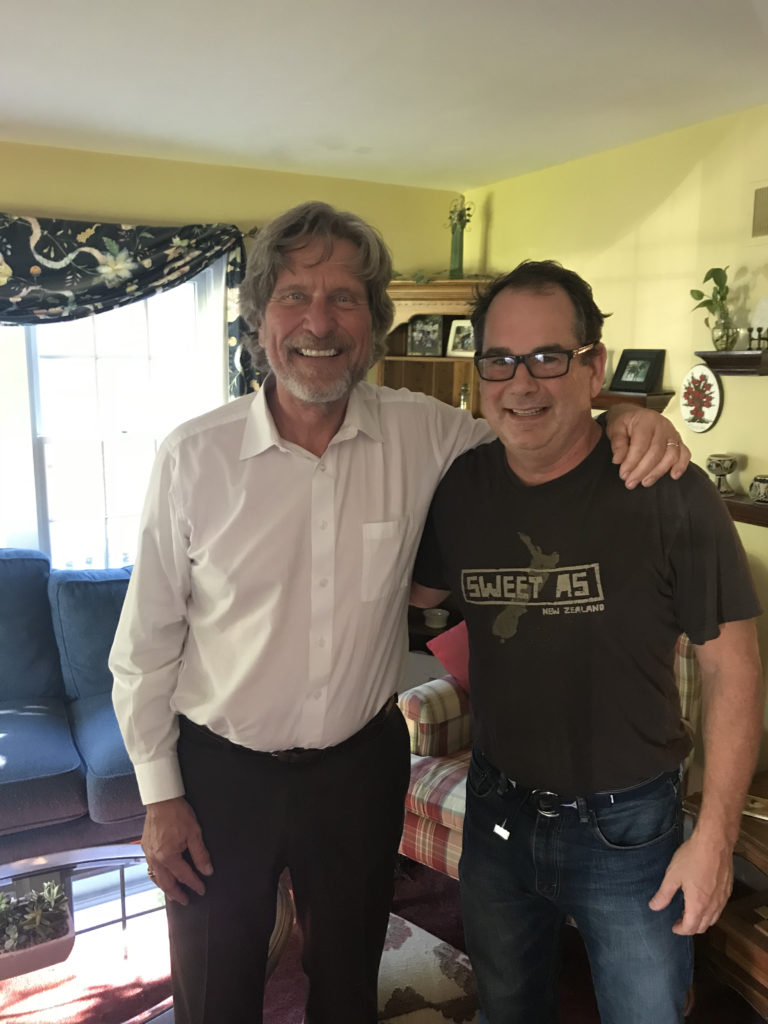
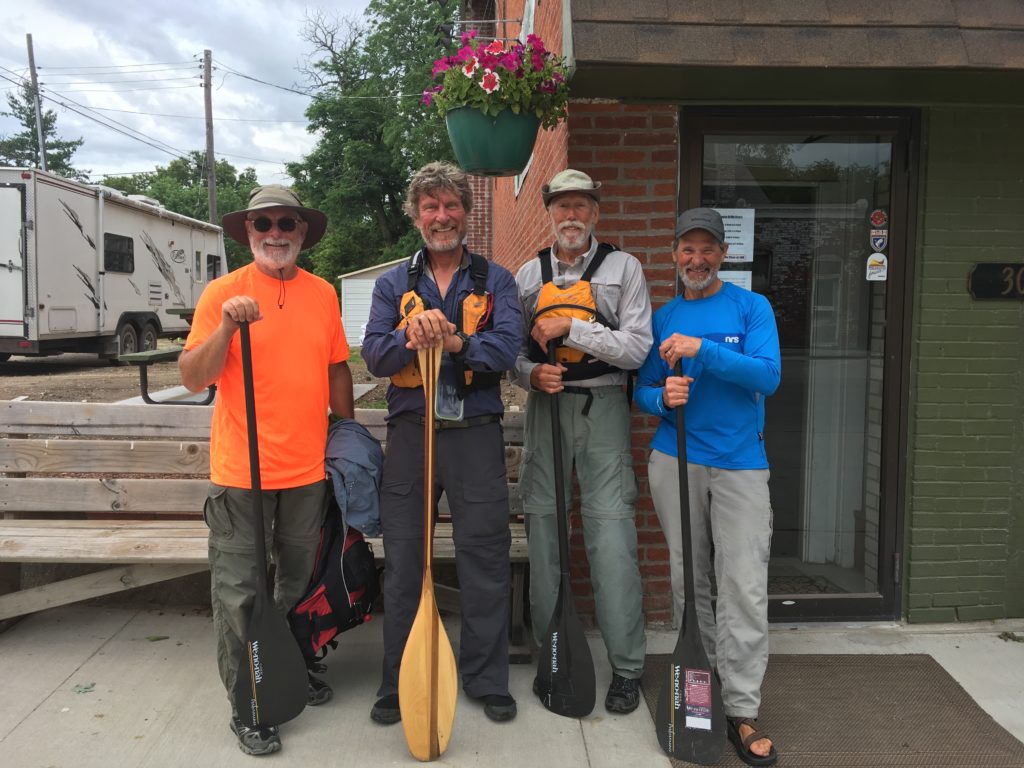
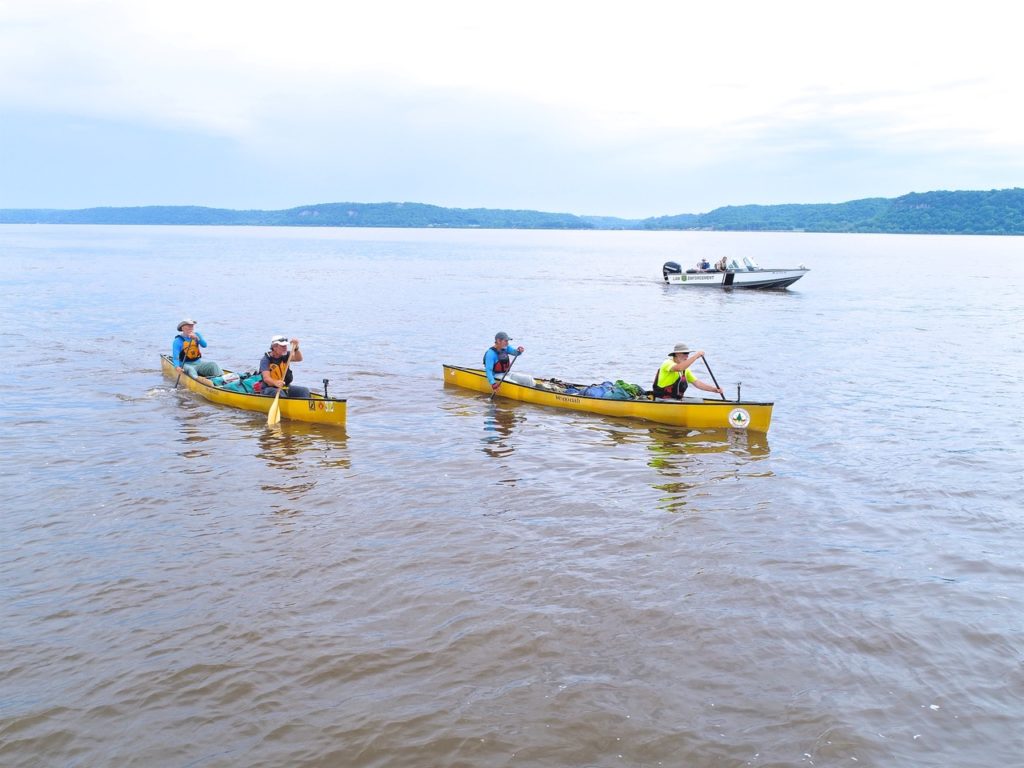
Our esteemed guest Paul Meincke took full measure of this river on an epic 70-day journey and joins the Windy City Historians in a special episode of our “Canoe Chronicles” to share some history and present reality of the “Mighty” Mississippi. In 2017, Paul, with friends Bill Baar, Tim Clark, and Tom Lobacz, started this adventure at the river’s headwaters in Minnesota and canoed some 2,320 miles to Gulf of Mexico. Captured in the documentary ”Mississippi by Canoe” on YouTube, Paul will tells of the trip’s challenges, triumphs, and insights and offers some behind the scenes in the making of the documentary. We hope you will enjoy this lively tale of paddling, politics, and history sprinkled with legends, mosquitoes, alligators, and how life is better when experienced by canoe, even 950,000 paddle strokes later.
Paul Meincke is “mostly” retired after 30-years of general assignment reporting for ABC7 Eyewitness News in Chicago, and ironically Paul’s celebrated 45-year broadcast career began on the banks of the Mississippi River in his hometown, Rock Island, Illinois. It was a real pleasure to met and talk with him.
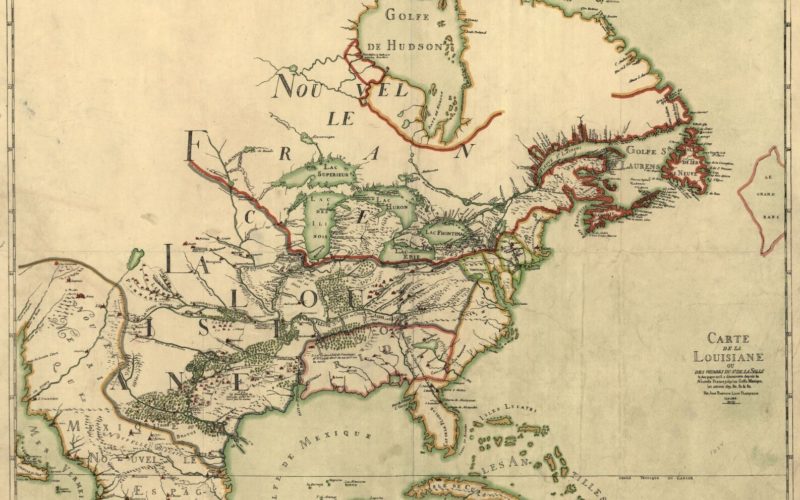
Our examination of René-Robert Cavelier, Sieur de La Salle continues in this episode, as we follow the progress of the 1976-77 La Salle II Expedition, which ran into rough weather in Door County, Wisconsin and plot their progress as winter forces the crew out of their canoes to walk or portage the frozen rivers and roads, as they try to make it to the Mississippi. Author Lorraine Boissoneault shares her insights from her book The Last Voyageurs and we interview Reid & Ken Lewis who organized this epic reenactment and and Rich Gross who was part of the crew on this trek seeking the Gulf of Mexico.
We also gained fascinating insights from our interview with veteran broadcaster Paul Meincke recounting his 2017 trip canoeing the Mississippi from its headwaters to the Gulf and the ever present dangers of paddling this river of commerce of America’s heartland.
Reid Lewis in 2018 at the Elgin Natural History Museum
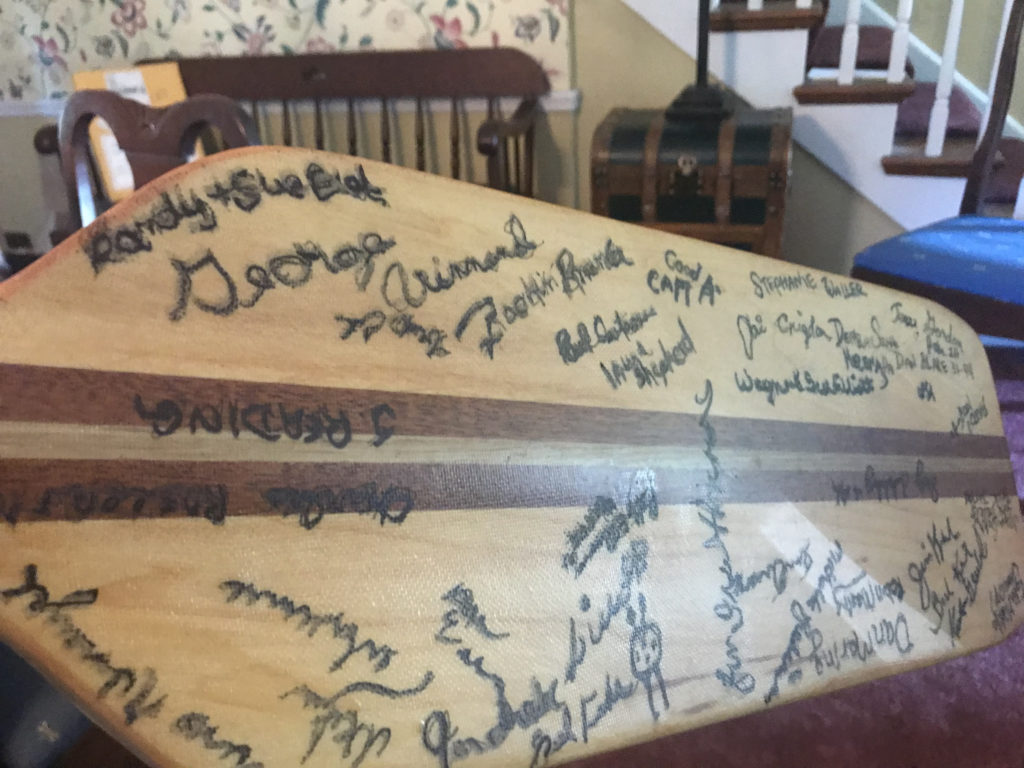
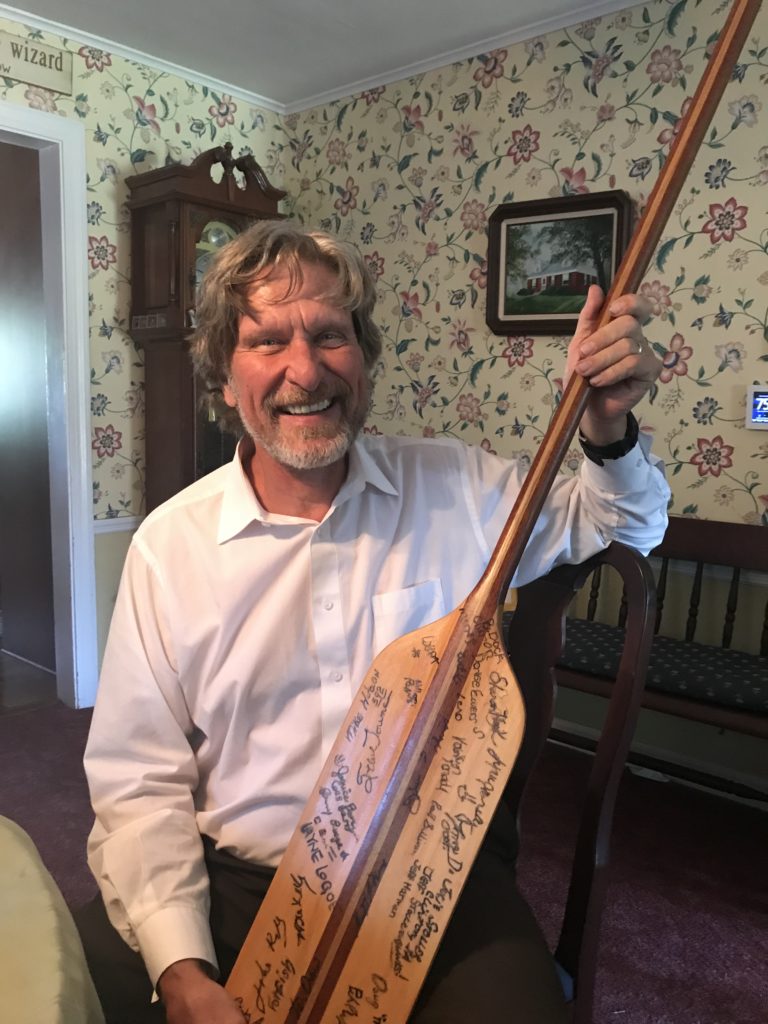
Paul Meinike and his commerative paddle from the trip
Artist’s rendering of La Salle claiming Louisiana for France
Tabor Hill Winery in Buchanan, Michigan co-founded by Len Olsen, who created the sparkling wine Décidons Demain meaning “Let’s decide tomorrow” in support of the reenactment.